
Most businesses that come looking for UI/UX design services already know something is off. Their app feels clunky. Their eCommerce checkout bleeds abandoned carts. Their internal ERP tool gets ignored because nobody wants to touch it. Technically, the design works. But it doesn’t work for the people who have to use it every day.
That gap between “functional” and “actually good” is exactly where UI/UX design lives. And in 2026, that gap is costing businesses more than they realize.
Here’s what professional UI/UX design services actually include, how they connect to revenue and retention, and what to look for when you’re evaluating an agency partner.
What UI/UX Design Services Actually Include
The term gets used loosely, so let’s be specific. UI (user interface) and UX (user experience) are related but distinct disciplines. Good agencies handle both — and they don’t treat them as interchangeable.
UX Design: The Architecture of How It Works
UX design is about structure and flow. It answers one question: can the person using this product accomplish what they came to do, quickly and without frustration?
That work includes:
- User research and journey mapping — understanding who your clients or internal teams are, what they need, and where they get stuck
- Information architecture — organizing content and features so the right things are easy to find
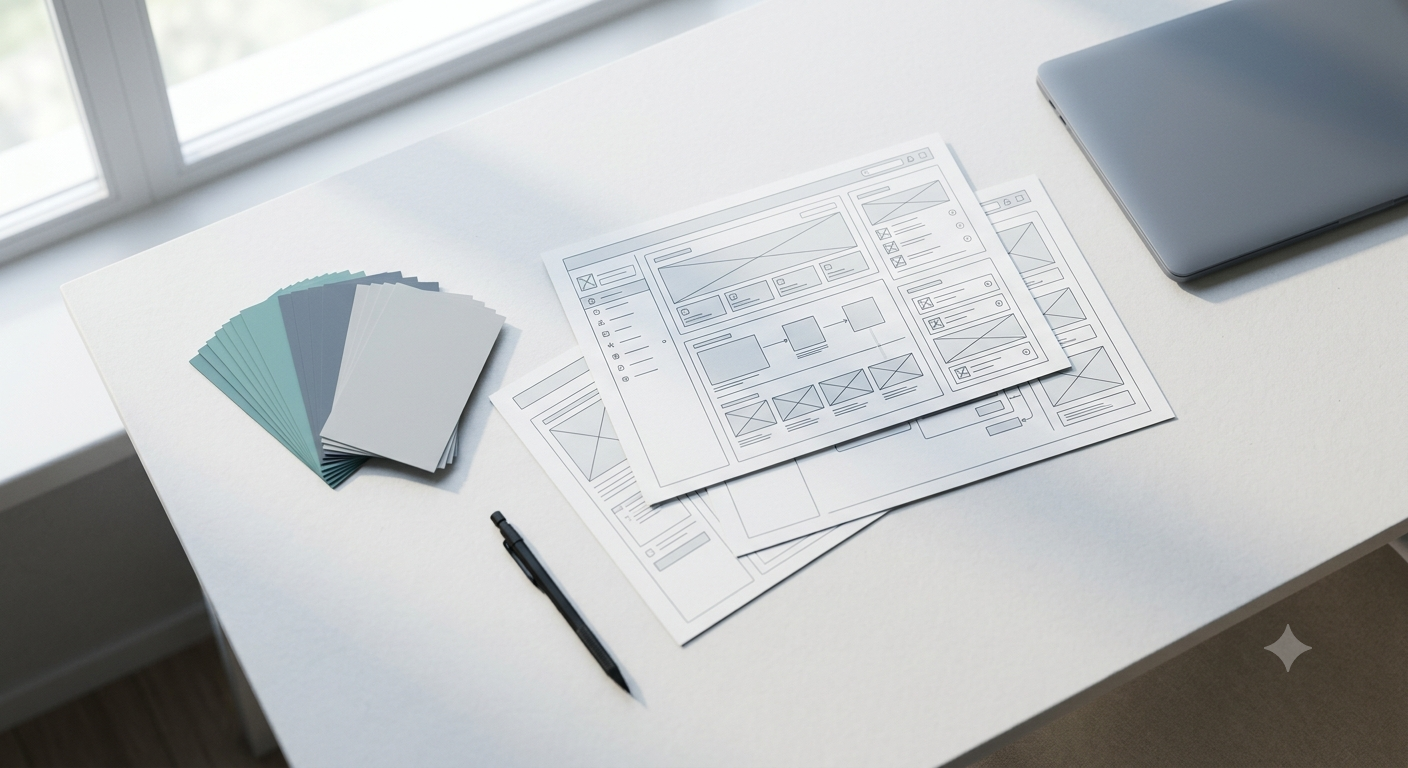
- Wireframing and prototyping — building low-fidelity blueprints before a single line of code is written
- Usability testing — validating that real people can actually navigate what you’ve built
UI Design: The Craft of How It Looks
UI design takes the structure UX creates and makes it visually coherent, on-brand, and intuitive. This includes:
- Visual design systems — consistent color palettes, typography, spacing, and component libraries
- Screen-level design — every state, every button, every interaction, designed with intention
- Responsive design — ensuring the experience holds across desktop, tablet, and mobile
- Micro-interactions and motion — the small details that make a product feel polished rather than pieced together
When these two disciplines work together from the start, the result is a product that feels effortless to use. When they’re bolted on separately or treated as an afterthought, you get something that looks decent but frustrates everyone who touches it.
Why UI/UX Design Directly Affects Revenue
This is where a lot of businesses underestimate the stakes. Design isn’t decoration. It’s a conversion and retention mechanism.
Conversion Rates on eCommerce Platforms
A poorly designed checkout flow doesn’t just annoy customers — it costs you sales. Friction at any point in the purchase journey, whether that’s confusing navigation, unclear calls to action, or a form that asks for too much, translates directly into abandoned carts and lost revenue. Clean, intentional UI/UX design removes that friction.
For businesses building or rebuilding an eCommerce platform, the design layer isn’t optional. It’s a core part of the business case.
Adoption Rates on Internal Tools
If you’ve invested in a custom ERP system and your team still defaults to spreadsheets, the problem is almost always UX. People don’t avoid software because it lacks features. They avoid it because it’s hard to use.
Strong UX design on internal tools drives adoption, which drives the operational efficiency the tool was supposed to deliver in the first place. Without it, you’ve paid for infrastructure that sits underused.
App Retention and Engagement
For mobile apps, the first session is everything. If someone downloads your app and can’t figure out what to do within the first 60 seconds, they leave — and they don’t come back. UI/UX design is what makes that first session work.
What a UI/UX Design Engagement Looks Like in Practice
A lot of businesses have been burned by agencies that delivered wireframes and called it done. Real UI/UX design services are a process, not a one-time output.
At TechYouKnow, UI/UX design runs through the same three-step delivery framework used across every engagement: Analyze, Implement, Optimize.
Analyze means starting with your actual business problem, not assumptions. Who’s using this product? What are they trying to accomplish? Where does the current experience fail them? This phase produces research, journey maps, and a clear design brief — before anything gets built.
Implement is where wireframes become high-fidelity designs, and high-fidelity designs become a working product. Iterative feedback loops are built into this phase so you’re not surprised at the end.
Optimize is what happens after launch. Real usage data informs design improvements. The product gets better as more people use it, not worse.
That’s meaningfully different from an agency that hands you a Figma file and disappears.
What to Look for When Evaluating UI/UX Design Services
If you’re comparing agencies right now, these are the questions that separate serious partners from order-takers.
Do they start with research or with design? Any agency that jumps straight to mockups without understanding your audience and goals is guessing. Good UX starts with discovery.
Can they show work across different product types? A wellness app, a healthcare platform, a writing tool, and an industrial system all have different design requirements. An agency that has worked across those contexts will bring sharper thinking to your project.
Do they design for the full system or just the screens? If your product connects to an ERP, an eCommerce backend, or a mobile app, the design needs to account for the whole experience — not isolated screens.
What happens after launch? Design isn’t finished when the product ships. Ask how they handle post-launch iteration and whether optimization is part of the engagement.
UI/UX Design as Part of a Larger Build
One of the most common mistakes mid-market businesses make is hiring separate vendors for design and development. The design agency produces beautiful mockups. The development team builds something different. Then everyone argues about whose fault it is.
When UI/UX design is integrated with the development process from day one, that problem disappears. The design informs the build. The build informs the design. The result is a product that actually matches what was scoped.
This is why TYK handles UI/UX design as part of the same engagement as eCommerce platform development, mobile app design, and ERP system development. You don’t manage multiple vendors. You work with one team that owns the outcome.
FAQs
What is the difference between UI design and UX design? UX design focuses on the overall experience and flow — how someone moves through a product to accomplish a goal. UI design focuses on the visual layer: the screens, components, and interactions that make the experience feel polished and intuitive. Both are necessary, and neither works well without the other.
How do UI/UX design services affect conversion rates? Design directly influences whether someone completes a purchase, fills out a form, or keeps using an app. Removing friction from key flows — checkout, onboarding, navigation — reduces drop-off and increases the percentage of visitors who take the action you want them to take.
Do I need UI/UX design services if I’m building an internal tool? Yes. Internal tools with poor UX get avoided by the teams they’re built for. If your ERP system or operations platform is hard to use, your team will work around it instead of through it — which defeats the purpose of building it.
How long does a UI/UX design engagement take? It depends on scope and complexity. A focused MVP design can move quickly. A full eCommerce platform or ERP interface with multiple roles and workflows takes longer. The right agency will give you a clear timeline after a proper discovery phase — not before.
What deliverables should I expect from a UI/UX design engagement? At minimum: user research outputs, wireframes, high-fidelity screen designs, a component or design system, and prototypes for key flows. For larger projects, expect usability testing results and documentation that supports the development team.
Can UI/UX design be added to an existing product, or does it require a full rebuild? Both are possible. Sometimes a targeted redesign of a specific flow — checkout or onboarding, for example — delivers significant results without touching everything else. Other times, the underlying structure is the problem and a more complete redesign is the right call. A good agency will tell you which situation you’re actually in.
How do I know if my current product has a UX problem? Common signals: high drop-off rates at specific steps, low feature adoption, frequent support tickets about navigation, and feedback from your team or customers that the product is hard to use. If any of those sound familiar, the design is worth a serious look.
The Bottom Line
UI/UX design services aren’t about making things look nice. They’re about building products that work for the people who use them — and that translates directly into conversions, adoption, and retention.
If you’re building something new or fixing something that isn’t performing, the design layer deserves the same attention as the technology underneath it.
Book a free consultation to talk through what your product needs and how a structured design process can get it there.